
Fences That Look Refinished Without Replacement Costs
Fence restoration in Hollidaysburg for wood and vinyl privacy fencing damaged by algae growth and weathering
Wood and vinyl privacy fences throughout Blair County accumulate green algae and gray weathering through humid summers and wet fall seasons, making homeowners assume they need replacement when a proper restoration process can add years of life. Fence restoration involves a two-stage process—cleaning first to remove biological growth and embedded dirt, then treating the surface to prevent rapid re-weathering and protect against future moisture damage. Under Pressure Pro Cleaners handles residential fencing throughout Hollidaysburg, Martinsburg, and Canoe Creek-area properties with large yard perimeters where privacy fences face constant exposure to shade, moisture, and seasonal temperature swings that accelerate deterioration.
Fence restoration addresses both the surface contamination and the underlying material degradation that makes fences look old and neglected. Algae and lichen root into wood grain and porous vinyl, causing green and black streaking that washing alone removes only temporarily unless the organisms are killed at the root. Weathering opens wood grain and fades color, leaving surfaces vulnerable to faster moisture absorption and regrowth. Treating the surface after cleaning seals wood fibers and restores UV protection, extending the time before the fence returns to its weathered gray state.
Arrange a fence assessment to determine whether your wood or vinyl fencing is a candidate for restoration or requires replacement due to structural damage.
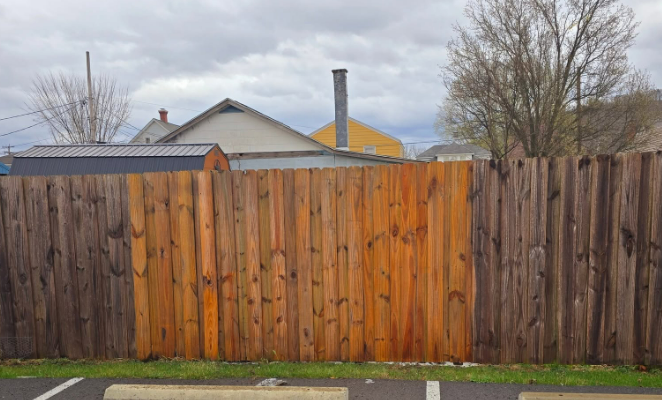
What Proper Fence Restoration Requires Beyond Washing
Restoration starts with soft washing to kill algae, lichen, and mold without splintering wood or damaging vinyl surfaces. Once organisms are dead and surface contaminants are rinsed away, the fence is allowed to dry fully before applying a protective treatment that seals wood grain, restores color, and provides UV resistance. Skipping the treatment step leaves cleaned wood exposed to rapid moisture reabsorption and weathering, meaning the fence returns to gray within months and regrowth starts immediately in humid conditions.
After fence restoration, green and black streaking is gone, wood returns to its natural color or accepts stain evenly, and vinyl fencing looks bright rather than dingy and faded. The surface feels smooth rather than rough or splintered, and water beads off treated wood instead of soaking in immediately. You'll notice the fence looks refinished without the cost of replacement, and the treatment delays future weathering significantly compared to cleaning alone.
Restoration works for structurally sound fencing with cosmetic damage from weathering and biological growth. It does not repair rotted posts, broken pickets, or failing fasteners—those require carpentry work before cosmetic restoration makes sense. Vinyl fencing benefits from cleaning and UV protectant application but cannot accept wood stains or sealers, so restoration focuses on contamination removal and surface brightening rather than color change.
Common Questions About Fence Restoration
Understanding the difference between cleaning and restoration helps you decide whether your fence needs simple washing or a full two-stage treatment to extend its life.
What's the difference between fence cleaning and fence restoration?
Cleaning removes surface contaminants and kills biological growth, leaving the fence visibly cleaner but still vulnerable to rapid re-weathering. Restoration adds a protective treatment step after cleaning that seals wood, restores color, and provides UV protection to delay future deterioration. Cleaning alone is a temporary fix; restoration extends the fence's functional life.
How long does fence restoration treatment last before weathering returns?
Treated wood fences typically maintain color and protection for two to four years depending on sun exposure, moisture levels, and surrounding vegetation. Untreated fences that are only cleaned return to gray weathering within months. Reapplication every few years maintains appearance and prevents the deep weathering that requires replacement.
Can fence restoration fix wood that's already turning gray?
Restoration removes the gray oxidized layer and restores wood to its natural color or prepares it to accept stain evenly. If wood has weathered beyond surface oxidation into structural fiber breakdown, restoration can improve appearance but won't reverse rot or deep cracking. The assessment step identifies whether your fence is a good candidate.
Does restoration work on vinyl privacy fences?
Vinyl fencing benefits from soft washing to remove algae and mold, followed by UV protectant application to restore brightness and delay future fading. Vinyl cannot accept wood stains or penetrating sealers, so restoration focuses on cleaning and surface protection rather than color change. Heavily faded or chalky vinyl may not fully restore to original color.
Why do fences in Martinsburg and Canoe Creek areas weather so quickly?
Humid summers, surrounding tree cover, and properties near water sources create constant moisture exposure that accelerates algae growth and wood weathering. Fences in shaded areas stay damp longer, allowing biological organisms to root and spread faster than in full-sun locations. Larger yard perimeters mean more fencing surface area exposed to these conditions simultaneously.
Under Pressure Pro Cleaners specializes in fence restoration as a cost-saving alternative to replacement, backed by full licensing, insurance, and real before-after documentation from completed Blair County jobs. Request a free estimate to review your fence's condition and determine whether restoration will deliver the results you're looking for.