Driveways Without Rust Streaks and Salt Haze
Driveway cleaning in Hollidaysburg for concrete and asphalt surfaces stained by winter salt and freeze-thaw damage
Winter road salt tracking and freeze-thaw spalling leave Blair County driveways stained with rust streaks, white salt haze, and embedded tire marks that a surface cleaning pass alone won't remove. Driveway cleaning involves chemical pre-treatment before pressure application to address the underlying staining rather than just surface-level dirt, which is why some driveways look clean immediately after washing but still show discoloration once dry. Under Pressure Pro Cleaners handles residential and commercial driveway restoration throughout Hollidaysburg, focusing on homes in Duncansville and Pleasant Valley where long concrete driveways on larger residential lots develop heavy salt and rust deposits through repeated freeze-thaw cycles.
Driveway cleaning targets embedded contaminants that bond chemically to concrete and asphalt during temperature fluctuations, requiring pre-treatment to break those bonds before pressure removes them. Rust from vehicles, salt haze from winter tracking, and tire marks from turning or braking all require different chemical approaches—using pressure alone spreads the staining or leaves it partially embedded. A surface cleaner attachment provides consistent flat-surface results without the wand striping that creates uneven cleaning lines and missed spots across wide driveway sections.
Schedule a driveway assessment to identify the type of staining affecting your concrete or asphalt and determine the correct pre-treatment approach.
Why Pre-Treatment Matters for Driveway Stain Removal
Chemical pre-treatment dissolves rust, emulsifies oil, and breaks down salt deposits before pressure washing begins, allowing the water pressure to flush away loosened contaminants rather than just pushing them around. Rust staining requires acid-based treatment to dissolve iron oxide bonds, while oil and grease need alkaline degreasers to emulsify and lift from porous concrete. Applying pressure without pre-treatment leaves faint discoloration that reappears once the surface dries, wasting time and delivering incomplete results.
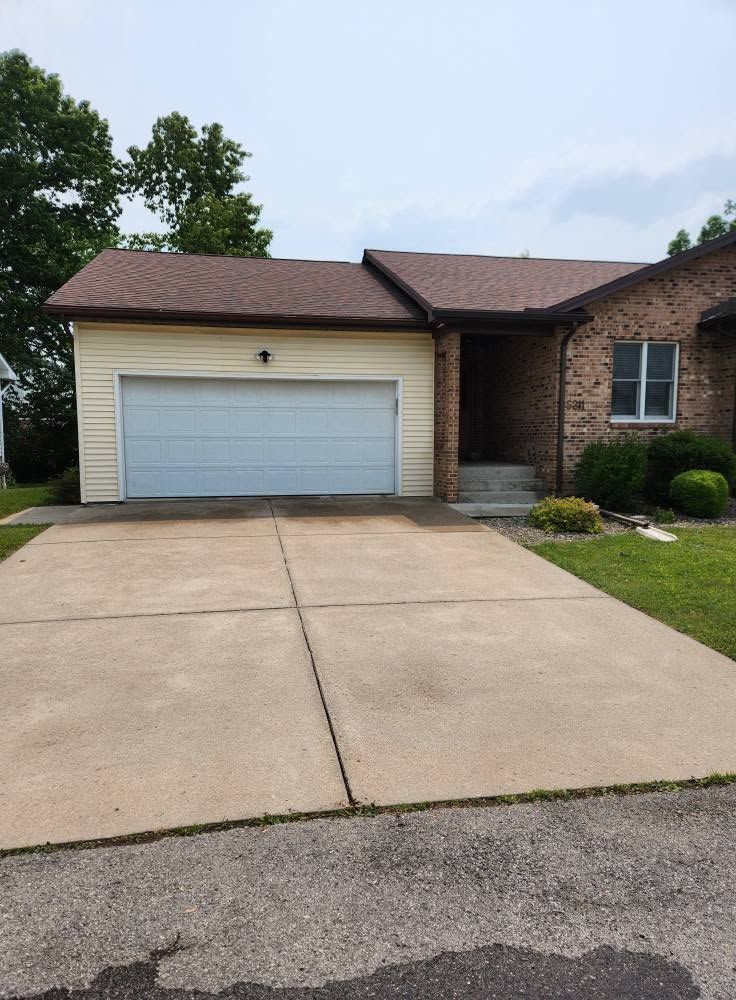
After proper driveway cleaning with pre-treatment, you'll notice that white salt haze no longer clouds your concrete, rust streaks disappear from where vehicles were parked, and tire marks are gone rather than faded. The surface returns to a uniform color without the streaking or patchy appearance that results from inconsistent pressure application or skipped chemical steps. Under Pressure Pro Cleaners uses surface cleaner attachments for driveways to maintain even coverage and avoid the zebra-striping effect that wand-only cleaning produces on large flat areas.
The service includes stain identification, chemical pre-treatment matched to contaminant type, surface cleaner application for uniform results, and post-cleaning rinse to remove residual chemicals. It does not include sealing, crack repair, or surface leveling—those are separate restoration steps. Driveway cleaning restores appearance but does not prevent future staining unless followed by sealer application, which is an optional add-on.
Answers to Frequent Driveway Cleaning Questions
Blair County driveways face specific seasonal damage, and understanding what driveway cleaning can and cannot address helps set realistic expectations for results.
What causes rust stains on concrete driveways?
Rust staining comes from metal particles in road salt, iron-rich groundwater, or vehicle fluids that oxidize on concrete surfaces. Once iron oxide bonds to porous concrete, it requires acid-based treatment to dissolve—pressure washing alone spreads the staining without removing it.
How does a surface cleaner attachment improve driveway cleaning results?
A surface cleaner uses rotating spray bars enclosed in a housing that maintains consistent distance and pressure across flat surfaces. This produces uniform cleaning without the streaking, missed spots, or wand marks that handheld pressure washing leaves on driveways. It also prevents overspray onto landscaping and siding.
Can driveway cleaning remove oil stains from parking areas?
Fresh oil stains respond well to alkaline degreaser pre-treatment followed by hot-water pressure washing. Old oil stains that have penetrated deeply into unsealed concrete may lighten but not disappear completely, as the oil has saturated the porous material beyond what surface cleaning can reach. Sealing after cleaning prevents future oil penetration.
When should driveways in Hollidaysburg be cleaned each year?
Spring cleaning addresses winter salt haze and freeze-thaw residue that accumulates through cold months. Scheduling in late April or May allows the surface to dry fully and reveals the extent of staining once temperatures stabilize. Properties with heavy vehicle traffic may benefit from a second fall cleaning before winter tracking begins again.
Does driveway cleaning damage concrete or asphalt surfaces?
Properly controlled pressure and appropriate nozzle distance do not damage sound concrete or asphalt. Deteriorated surfaces with existing spalling, cracking, or loose aggregate can worsen under high pressure, which is why surface assessment happens before cleaning begins. Adjusting PSI and using chemical pre-treatment reduces mechanical stress on aging driveways.
Under Pressure Pro Cleaners operates locally out of Altoona with full licensing and insurance, bringing the right equipment and chemical knowledge to handle Blair County's seasonal driveway staining. Contact us for a free estimate and review your driveway's specific contamination patterns and cleaning requirements.