Surfaces Cleaned Without Damaging the Slab
Concrete cleaning in Hollidaysburg for embedded gum, rust stains, and organic buildup that standard washing won't remove
Under Pressure Pro Cleaners handles concrete cleaning for residential and commercial properties across Hollidaysburg and the Blair County area, removing embedded gum, rust from metal furniture, efflorescence deposits, and deep organic staining that pressure alone won't lift. High foot traffic on downtown Hollidaysburg storefronts and Juniata-area commercial properties leaves concrete surfaces marked with contaminants that require chemical pre-treatment matched to the specific stain type before any water hits the surface. You'll see concrete restored to a clean appearance without the surface damage that comes from relying on one pressure setting for every situation.
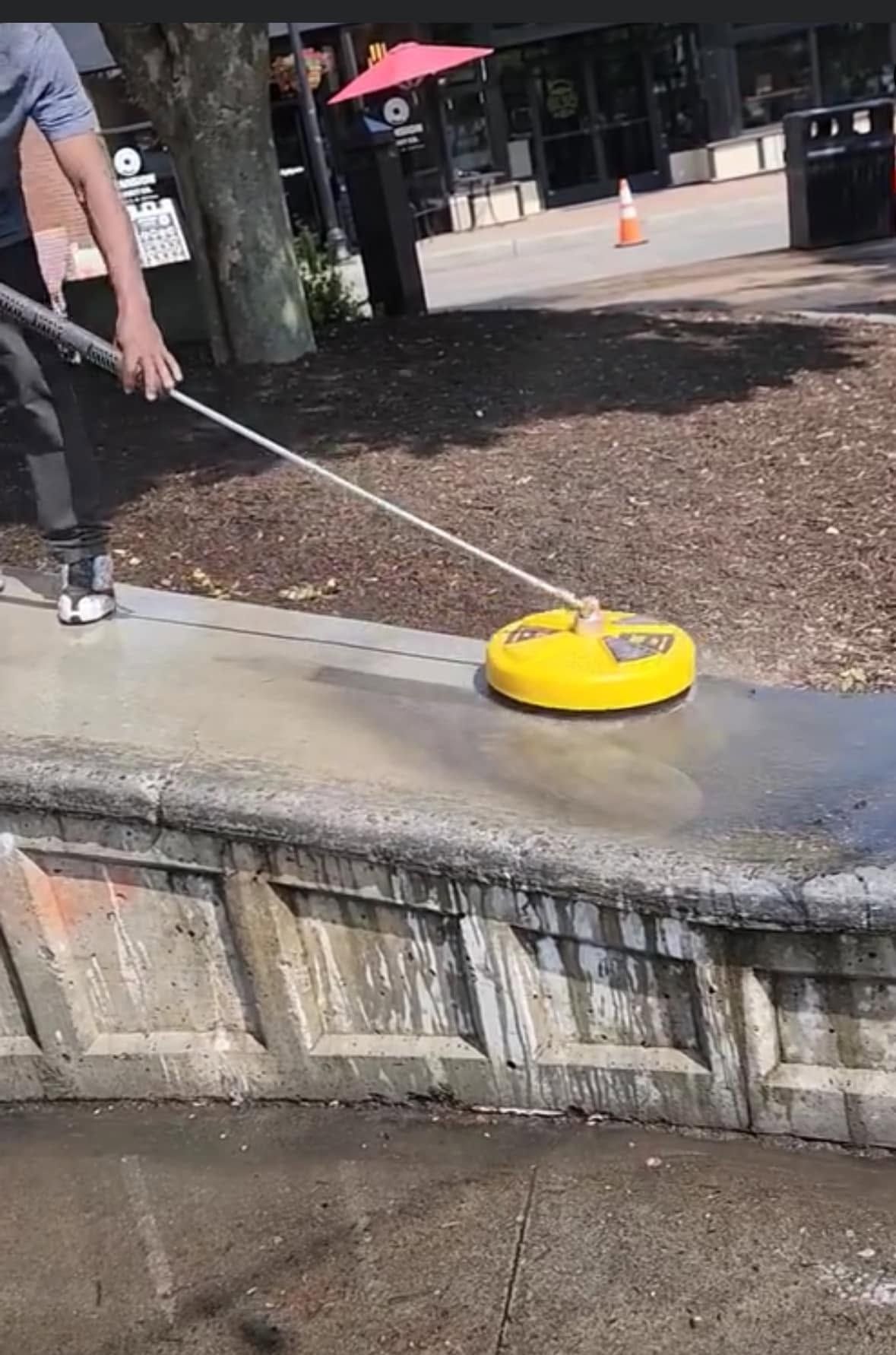
The service involves identifying what's actually staining the concrete—whether it's rust bleeding from metal fixtures, white efflorescence deposits from moisture migration, organic matter from leaf debris, or gum tracked in from sidewalks—and applying the correct chemical treatment to break down that specific contaminant before controlled pressure rinses it away. Standard pressure washing without pre-treatment either leaves stains in place or requires excessive pressure that pits and damages the concrete surface, shortening its lifespan and creating a rough texture that collects dirt faster.
Schedule a property evaluation to identify specific staining patterns and determine the right treatment approach for your concrete surfaces.
What Targeted Chemical Treatment Actually Accomplishes
Chemical pre-treatment works by reacting with the molecular structure of the stain—rust removers use acid-based chemistry to dissolve iron oxide, efflorescence treatments neutralize alkaline salt deposits, and organic stain removers break down tannins and biological matter so they release from the porous concrete surface. Each formulation is matched to what's embedded in the slab, applied at the concentration and dwell time needed for that contaminant, then rinsed with calibrated pressure that removes the loosened material without abrading the concrete itself.
After treatment, you'll notice that rust stains no longer show as orange streaks, white efflorescence deposits are gone rather than just wet and temporarily hidden, and organic staining from mulch beds or leaf debris no longer discolors the surface. Under Pressure Pro Cleaners completes the work so concrete reads as uniformly clean rather than patchy, and the surface texture remains smooth rather than roughened by excessive pressure that removes the cream layer.
The process includes inspection of the concrete condition before treatment to identify any existing cracks or surface degradation that require adjusted pressure settings, ensures that adjacent landscaping and building materials are protected from chemical overspray, and confirms that all residue is fully rinsed so no chemical film remains that could attract dirt or cause discoloration over time. Treatment does not repair structural damage, fill cracks, or seal the surface—it removes contaminants and restores the existing concrete to a clean state.
What Property Owners Usually Ask
Clients working with Under Pressure Pro Cleaners in the Hollidaysburg area often want to know how the service handles different concrete conditions and what results to expect from chemical treatment.
What types of stains require chemical pre-treatment instead of pressure alone?
Rust stains from metal furniture or fixtures, efflorescence caused by subsurface moisture bringing salts to the surface, embedded gum from foot traffic, and organic staining from mulch or leaf tannins all require targeted chemical treatment because pressure washing alone won't break down the molecular bond between the stain and the porous concrete.
How does chemical treatment avoid damaging the concrete surface?
Pre-treatment loosens contaminants so they release with lower pressure settings—typically 1,500 to 2,500 PSI depending on the concrete age and condition—rather than requiring 3,000+ PSI that can pit the surface, remove the cream layer, and create a rough texture that accelerates future staining.
What happens to the polymeric sand between pavers during concrete cleaning?
When cleaning paver surfaces, pressure is calibrated to stay below the threshold that dislodges joint sand, and chemical treatments are selected to avoid breaking down polymeric sand binders—this prevents the costly resanding work that results from improper high-pressure washing of paver installations.
When should concrete be cleaned to prevent permanent staining?
Rust and organic stains become harder to remove the longer they sit because they oxidize and penetrate deeper into the porous concrete—cleaning within the first season after staining appears typically yields better results than waiting multiple years for buildup to set.
What areas of concrete see the most staining in Blair County properties?
Sidewalks and aprons around commercial storefronts in downtown Hollidaysburg accumulate gum and foot traffic staining, while residential driveways and patios near mulch beds or under tree canopies develop organic tannin stains during wet Pennsylvania springs when moisture accelerates biological growth and mineral leaching.
Under Pressure Pro Cleaners is fully licensed and insured, provides free estimates for both residential and commercial concrete cleaning projects, and completes work using treatment protocols matched to the stain type rather than a single pressure setting applied to every surface. Request a detailed estimate based on your current concrete condition and the specific contaminants affecting your property.