
Wood and Composite Surfaces Cleared of Buildup
Deck cleaning in Hollidaysburg for wood and composite outdoor living spaces affected by mildew, algae, and surface staining
Dirt, mildew, algae, and surface staining accumulate on wood and composite decks throughout the Hollidaysburg area, creating slippery conditions when wet and discoloration that makes outdoor spaces look neglected. Moisture from Pennsylvania's humid summers and wet spring seasons accelerates mold and algae growth, particularly on shaded deck sections that don't dry quickly after rain, and standard scrubbing won't remove buildup that's embedded in the grain of wood or the textured surface of composite materials. Under Pressure Pro Cleaners removes this buildup using cleaning methods calibrated for the deck material—wood requires different treatment and pressure settings than composite to avoid damaging the surface while still lifting contaminants that affect appearance and safety.
The process involves treating the deck surface with a cleaner formulated for organic growth, allowing dwell time for the solution to break down mildew and algae, then rinsing with controlled pressure that removes the loosened contaminants without raising wood grain or scratching composite boards. Wood decks typically tolerate 500 to 800 PSI when cleaned with the grain direction, while composite materials require even lower pressure to avoid surface damage that voids manufacturer warranties.
Request a property evaluation to assess your deck material and current buildup before determining the cleaning approach.
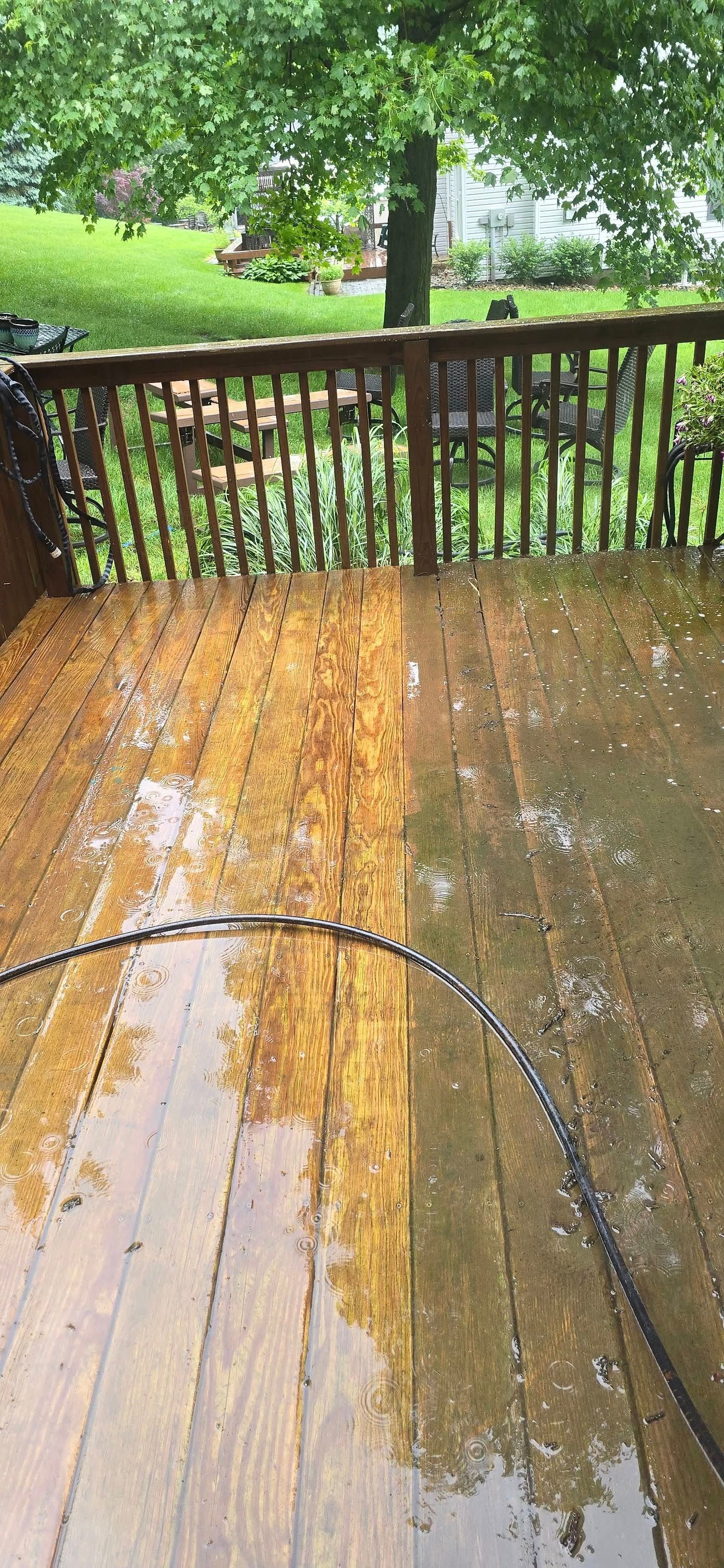
How Proper Cleaning Prepares Surfaces for Sealing or Staining
Cleaning removes the layer of dirt, organic growth, and oxidized surface material that prevents sealers and stains from adhering properly to wood—if you apply finish over contaminated wood, it peels within months because it's bonding to the dirt layer rather than the wood itself. The cleaning process opens the wood grain slightly and exposes clean surface fibers that accept stain evenly, producing consistent color rather than blotchy results where some areas absorb finish and others don't.
After cleaning, you'll see that the deck surface no longer feels slippery when wet, discoloration from mildew and algae is gone, and the natural wood color or composite shade is visible again rather than hidden under a gray film. Wood decks appear lighter and more uniform in color, while composite decks regain the original manufacturer color without the green or black streaking caused by organic growth.
Deck cleaning does not repair structural damage, replace rotted boards, or apply sealer or stain—it removes surface contaminants and prepares the material for protective treatments if you choose to apply them afterward. The service focuses on restoring the existing surface to a clean condition that improves both appearance and safety by eliminating slippery buildup.
Common Questions About This Service
Homeowners in Hollidaysburg typically want to know how cleaning affects different deck materials and what to expect during the work.
What causes the slippery buildup on deck surfaces during wet weather?
Algae and mildew thrive in moist environments and form a biofilm layer on deck surfaces—this layer becomes extremely slippery when wet because the organic material creates a slick coating over the wood or composite that reduces traction and increases fall risk.
How does cleaning method differ between wood and composite decking?
Wood requires lower pressure applied with the grain direction to avoid splintering and raising wood fibers, while composite decking needs even gentler pressure to prevent scratching the cap layer that protects the core material—each material also responds differently to cleaning solutions, with wood tolerating stronger treatments than composite.
When should a deck be cleaned to prepare for staining or sealing?
Wood should be cleaned and allowed to dry for 48 to 72 hours before applying any sealer or stain—this ensures the surface is free of moisture that would prevent finish absorption and gives raised grain time to settle so the finish bonds to stable wood fibers.
What happens if mildew and algae are left on the deck for multiple seasons?
Organic growth continues to spread and penetrate deeper into wood grain or composite surface texture, making removal more difficult over time—wood can develop gray weathering that requires additional restoration steps beyond basic cleaning, and composite surfaces may experience permanent staining if growth isn't addressed within the first year.
Why do shaded deck areas develop more buildup than sunny sections?
Shade prevents surfaces from drying quickly after rain or morning dew, creating prolonged moisture conditions that allow mildew and algae to establish and spread—sunny areas dry faster, which limits the time organic growth has to take hold and reproduce on the deck surface.
Under Pressure Pro Cleaners completes deck cleaning using methods appropriate for your specific material, whether wood or composite, and provides free estimates based on deck size and current condition. Schedule a consultation to determine the right cleaning approach and discuss whether sealing or staining is recommended after the surface is cleaned.